

Need to know / Worldwide
How to wow employers using working holiday examples in interviews
Maria, Careers Advisor + CV Writer, on how to make your working holiday work for you.

There's no sugarcoating it, interviews can be really daunting. But, coming back from your working holiday and having the experience of a lifetime puts you in a brilliant position because you've got unique, interesting examples and a skill set that employers love to see.
Regardless of the job you're going for, showing that you survived (and thrived) while abroad demonstrates many of the key employment skills employers look for on your CV. Frame it in the right way in an interview, and it might just become the thing that sticks in an employer's mind: "the ski resort story, right? Loved that example."
What are employers looking for in an interview?
One of the best predictors of how you'll perform in a job is how you've faced challenges in the past. Employers don't expect you to walk in knowing everything from day one, but how you've handled things before is a strong indicator of whether you've got what it takes to excel in the role. This is why "competency-based" questions are such a key part of most interviews. These questions prompt you to give specific examples from your past to prove you have the skills, behaviours, and qualities needed for the job.
You might be asked questions along the lines of:
- Tell me about a time you used excellent communication skills.
- Give me an example of when you faced a complex problem and how you overcame it.
- Describe a time you had to work as part of a team to achieve a shared goal.
A quick tip: when you're preparing for an interview, start with the job description. Analyse it thoroughly, because if the role calls for someone with excellent communication, leadership, and problem solving skills, chances are there will be questions to test whether you actually have these skills. Prepare your examples with those specific skills in mind.
Can you use working holiday experience in a job interview?
Every job comes with its own challenges and experiences, and those are exactly what you can turn into strong interview stories. Take working in a café at a ski resort as an example. You've probably faced a difficult customer, dealt with an unexpected power cut, or had a day where you're short staffed because someone's called in sick. It's moments like these that really test your skills, and they're exactly the kind of examples you can draw on in an interview.
Take a moment here to reflect on your experiences:
- What challenges did you face in your job abroad?
- How did you deal with it?
- What skills did you develop from this experience?
A quick tip: you don't have to stick to work examples either, your general experiences abroad count too. Missing a flight and having to rearrange travel at short notice, or managing on a tight budget, can make just as strong an example of key employability skills.
How to turn your working holiday experience into an interview answer
A technique you may have heard of before, and one that's an employer favourite, is the STAR technique. It's a well known interview method that helps you answer competency-based questions asking for specific examples from your past.
Going into an interview with three or four good quality STAR examples, ones that cover the core skills listed on the job description, means you'll be prepared for pretty much whatever they throw at you. STAR is a brilliant tool for arranging your ideas and building your stories.
The STAR method
S = Situation
Set the scene of the story. Describe where you were working, what role you were doing and what your key responsibilities were.
T = Task
Introduce the challenge, project or problem you experienced.
A = Action
This is the real juicy part of the story, and the bit employers are most interested in. What steps did you take? What did you actually do?
R = Result
Round off the example with the outcome. It doesn't always have to be positive, or as extreme as saving someone's life. If it wasn't a positive outcome, you can talk about what you learnt and what you'd maybe do differently next time.
Working holiday interview examples
Here's an example of how a working holiday story might sound when using the STAR method.
Example: Tell me about a time you worked under pressure
Situation: While on a working holiday in Canada, I worked at a busy coffee shop at a ski resort that served hundreds of customers each day. My role was on the service counter, taking orders and serving food and drinks.
Task: One day, a customer came in who only spoke French and had limited English. While I was taking their order, they let me know they had a number of serious allergies and started pointing at items on the menu to check what was safe for them to eat. I knew I had to be really careful given how serious allergies can be.
Action: A queue was building up behind the customer, but I knew we had to get this right, so I asked a team member to help cover the till while I took the time to properly serve them. I then focused on understanding exactly what their allergies were, using Google Translate and asking them to write down what they couldn't eat, which turned out to be nuts, eggs, and dairy. We had an allergen menu in the café, so I used that to talk them through the items they could safely order. Once I'd taken their order, I went straight to the head chef and made sure the whole kitchen team knew about the allergies, so their food could be prepared separately to avoid any risk of cross contamination. Once the food was ready, I personally delivered it to the table to reassure the customer.
Result: The customer was able to enjoy their meal safely, and my manager praised me afterwards for how I'd handled the language barrier while ensuring their needs were properly understood and met. I learnt the importance of adapting my communication and working as part of a team when solving problems in a busy environment.
Sounds like an impressive example, right? Good quality STAR examples like this demonstrate a range of key employment skills, such as communication, teamwork, leadership, working under pressure, and customer service. I'm positive that if you rack your brain, you'll have loads of examples to use!
Bonus interview advice
Preparation really is key
As well as being confident about what they're looking for in the job description and preparing examples that align with these skills, research the company in detail too. Look into their website, news, projects and values, and ask yourself: why do I want to work for this company?
Practice, practice, practice
Unfortunately, interviews aren't something most of us can just wing. Practice in front of the mirror, run through it with a friend or family member, or use an AI platform to help you practise and prepare your examples.
Don't feel afraid to big yourself up
Even if it feels uncomfortable, no one is going to shout about how brilliant you are but you. Think about your achievements and key selling points for the role you're applying for. Remember, if you've been offered an interview, the employer clearly already sees your potential. Now it's your job to show them exactly why they should hire you.
Prepare some questions to ask the interviewer
The questions you ask can highlight your curiosity and genuine interest in the role. Questions about training, progression or what a typical work day looks like usually go down well. Try to avoid asking about salary or benefits at this stage.
Next steps – using your working holiday experience in a job interview
As you close the door on your working holiday and start looking for your next role, don't underestimate just how much those experiences abroad can help you in an interview. It's easy to think interviews are only about having the right answer, but they're just as much about how confidently and clearly you can talk about what you've done, and your working holiday has given you plenty to talk about.
So be proud of what you achieved out there, however big or small it felt at the time. Use those stories, that confidence and everything you learnt to your advantage, because you've genuinely got more to offer an interviewer than you might think.
ABOUT THE AUTHOR
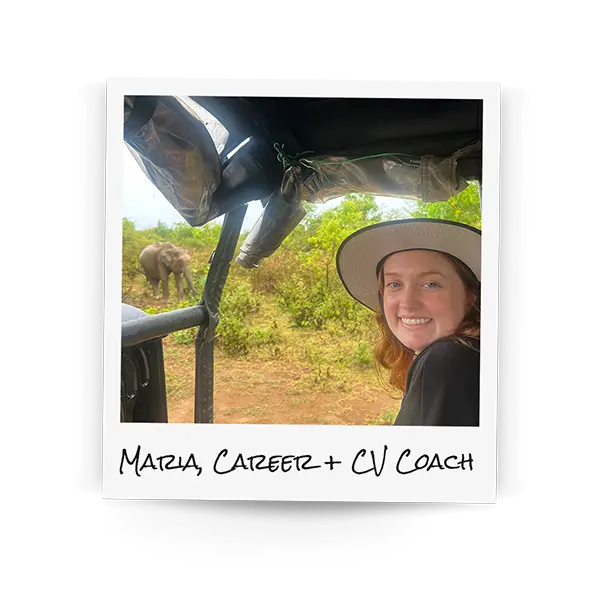
Maria Barden
Career guru
Maria works in schools, universities and with charities as a Careers Adviser, supporting people to find jobs and careers they feel proud of. She is also a member of the British Association of CV Writers, working with clients to build CVs and applications that help them secure their next role.
A lover of travelling, Maria has lived and worked in Australia for a year and backpacked across Europe and Asia. She understands first-hand the skills and opportunities that come with travelling and working abroad, and how these experiences can shape your career.
"Every job comes with its own challenges and experiences, and those are exactly what you can turn into strong interview stories."

The Jenza newsletter