


Need to know / Worldwide
How to use your working holiday as a superpower on your CV
Professional CV Writer, Maria, on how to turn working abroad into a winning CV.

Writing about your achievements and convincing an employer just how brilliant you are isn't a skill that comes naturally to many of us. Luckily for you, coming back from your working holiday and travels across the world, you've returned with a whole new skill set and genuinely interesting experiences that can make you stand out.
What skills can you gain from a working holiday?
If you've read our working holiday examples to use in interviews, you'll already know just how many skills you've gained from your experiences abroad. You might be worried that adding your travels to your CV makes it look like you've had a career gap or just been on holiday, but if you sell it the right way, it does the opposite; it highlights just how much you've gained from the experience.
Travel naturally builds a huge number of transferable skills that are essential for pretty much any job. Communication, adaptability, flexibility and problem-solving are all key employment skills that employers actively look for in candidates, and they're exactly the kind of skills a working holiday builds without you even realising it.
How to put a working holiday on your CV
So you know it's worth including, but where does it actually fit? There's no single right answer here. A working holiday can show up in several places on your CV, and how best to present it really depends on the job you're applying for and your previous experiences. Here's where it can go, and how to include it in different sections:
Personal profile
This sits right at the top of your CV and sums up your key skills, experience and what you're looking for next. If you're applying for a role that's similar to what you did on your working holiday, for example you worked as a barista in Canada and you're applying for another hospitality job, this is a great place to mention it early on.
For example: 'Experienced hospitality worker with 6 months of international customer service experience in a busy ski resort café' tells the employer straight away that you have relevant experience, before they've even read the rest of your CV.
If the job isn't directly relevant to your next step, you can still reference your working holiday here; just frame it around the transferable skills rather than the role itself.
For example, if you're applying for a role at a school, your barista experience would have taught you skills like communicating with a range of people, remaining calm under pressure, and helping a new team member learn a new aspect of the role. Even if the role itself isn't relevant, consider how the skills you gained are ones you can take into the next position.
Skills section
This is where you list out your key skills and can be a great place to evidence the transferable skills your working holiday helped you build. Rather than just isting "communication" or "problem solving" on their own, you can briefly tie them to where they came from
For example: 'Communication: Developed strong communication and active listening skills during 12 months of travel, learning to adapt my communication style, understand social cues and navigate language barriers'.
Work experience
This is where you can really highlight what you did and achieved during your working holiday. There are a couple of ways to lay this out, depending on your situation.
If you worked for most or all of your time away, list it just like any other job, with the job title, company and dates.
For example: 'Barista, Café XYZ, Whistler, Canada, December 2025 to May 2026' followed by bullet points describing what you actually did and achieved.
If your time away was more of a longer career break, where work was just one part of it rather than the whole picture, you can list the whole period under a single heading instead.
For example: 'International Travel, June 2025 to July 2026.' Under that, add bullet points summarising your overall experience, then a few more specific bullet points covering the work you did and what you achieved during that time.
Interests
Not an essential part of a CV, but it can add some personality to a CV and could be a talking point if you are invited for an interview. You could include a bullet point or two highlighting your international travel experience and the skills that you gained from this.
How to describe your working holiday experience
Once you have considered where it fits, the next step is to sell it effectively. Employers love to see achievements in a CV. Your working holiday is a big achievement, so let's see how you can write about it that way. Here are some tips to make it sound amazing!
Start with a strong action verb
Instead of starting bullet points with "responsible for" or "was in charge of," start with what you actually did: managed, resolved, coordinated, trained, delivered, handled. It's a small change, but it makes every bullet point feel more achievement-focused and confident.
Quantify where you can
Numbers make a bullet point far more convincing than a general statement. If you served 150+ customers a day, delivered 8 sports events to over 100 young people daily at a summer camp, or trained 3 new staff members, add in the numbers to show this.
Tie it back to the job you're applying for
Look at job descriptions for the roles you're applying for and, where it's relevant, use similar language. If the role asks for "collaboration" and you worked as part of a team in a café, think about how you can present that experience to show the skill they're after. For example, describe how you collaborated with colleagues during busy shifts and supported each other to get through a rush.
Really think about your achievements
These can be anything from a piece of recognition you received at work, to a time you helped someone out, or brought in a new idea that changed the way something was done. They don't have to be big or obvious either, small things like being trusted with more responsibility or being the one who trains new colleagues say just as much about you as a candidate.
Here is a quick before and after of turning responsibilities into an achievement focused bullet point, using our barista example:
❌ Was responsible for customer service in a café.
✅ Served 150+ customers daily in a ski resort café, working across front of house, as a barista, waitressing and kitchen duties while collaborating with a team to ensure service ran smoothly.
❌ Dealt with customer issues.
✅ Resolved customer complaints on the spot, including navigating a language barrier to support a customer with serious food allergies.
❌ Helped train new staff.
✅ Trained 3 new starters during the season, showing them how to use the till and payment system, deal with customer queries and work well as part of the team.
Common CV mistakes to avoid
Over relying on AI
AI can be a brilliant tool when it comes to job searching, but only if it's used the right way. If you rely on it too heavily and let it write your CV for you, it'll lose all your personality and end up sounding generic and AI generated. Use it to improve what you've written, check your grammar or suggest new ideas, rather than to write your CV from scratch.
Sending the same CV to every application
Coming back from a working holiday, you might be looking at a range of different roles and sectors, and that's completely normal. But job descriptions vary even within similar roles, so sending out a generic CV won't speak directly to what that specific employer is looking for. Take a bit of time to adapt your CV for each application. It doesn't need to be a full rewrite, just enough to show why you're a great fit for that particular job. It can also help to keep a few different versions saved as templates for the different sectors you're applying to.
Being too modest about your working holiday
After talking about it as "just a bar job" or "just travelling" for months, it's easy to downplay it on your CV too. But undervaluing your own experience means the employer will too, so make sure you're describing it with the same confidence you'd use for any other job.
Too long or complicated formatting
You want a hiring manager to pick up your CV and quickly see why you'd be a great fit for the role. CVs should generally be 1-2 pages long, with clear, simple headings and bullet points. Avoid complicated layouts, tables, or too many colours, as they can actually make a CV harder to read, and some CV scanning software struggles to process them properly too.
What employers can learn from your working holiday
There's no one-size-fits-all when it comes to the perfect CV. It's less about following a strict formula and more about showing why what you've got makes you a great candidate for the role you're applying for. Be proud of the experience you gained abroad, and that confidence will shine through on the page – your job on the other side of the world is more of a CV superpower than you might think.
Ready to turn your working holiday into work experience?
Our Working Holidays, covering Canada, USA, Australia, New Zealand, Japan, South Korea and the UK, will set you up with everything you need to live and work around the world. Earn money, grow your skills and fund your CV-friendly time abroad.
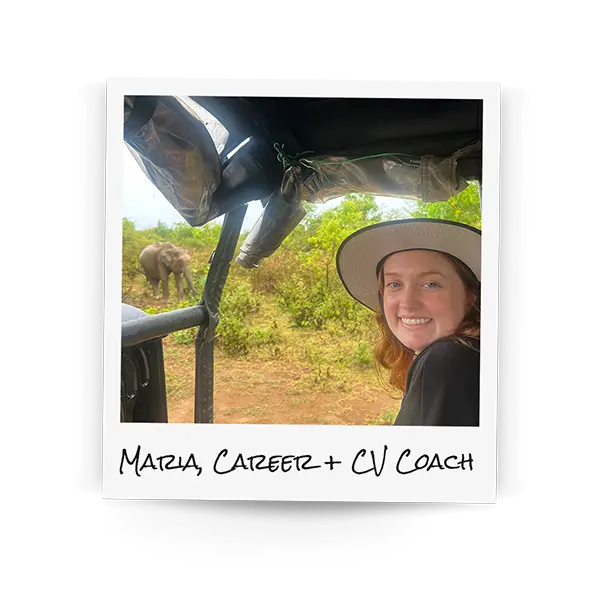
ABOUT THE AUTHOR
Maria Barden
Career guru
Maria works in schools, universities and with charities as a Careers Adviser, supporting people to find jobs and careers they feel proud of. She is also a member of the British Association of CV Writers, working with clients to build CVs and applications that help them secure their next role.
A lover of travelling, Maria has lived and worked in Australia for a year and backpacked across Europe and Asia. She understands first-hand the skills and opportunities that come with travelling and working abroad, and how these experiences can shape your career.

The Jenza newsletter