

Need to know / Japan
Everything you need to know before moving to Japan for a working holiday
How our roadtesters prepared for a ski season in Japan – from visa application to arrival.

So, you want to move to Japan on a working holiday visa? Love this for you. Whether you're heading to the incredibly underrated resorts for a ski season or planning a working holiday across Japan, this guide covers everything you need to know to get settled and let the sushi times roll.
Betsy, graduate from the UK, shares with us her insider tips on everything from the visa application process to what clothes to pack and what phone deals are best.
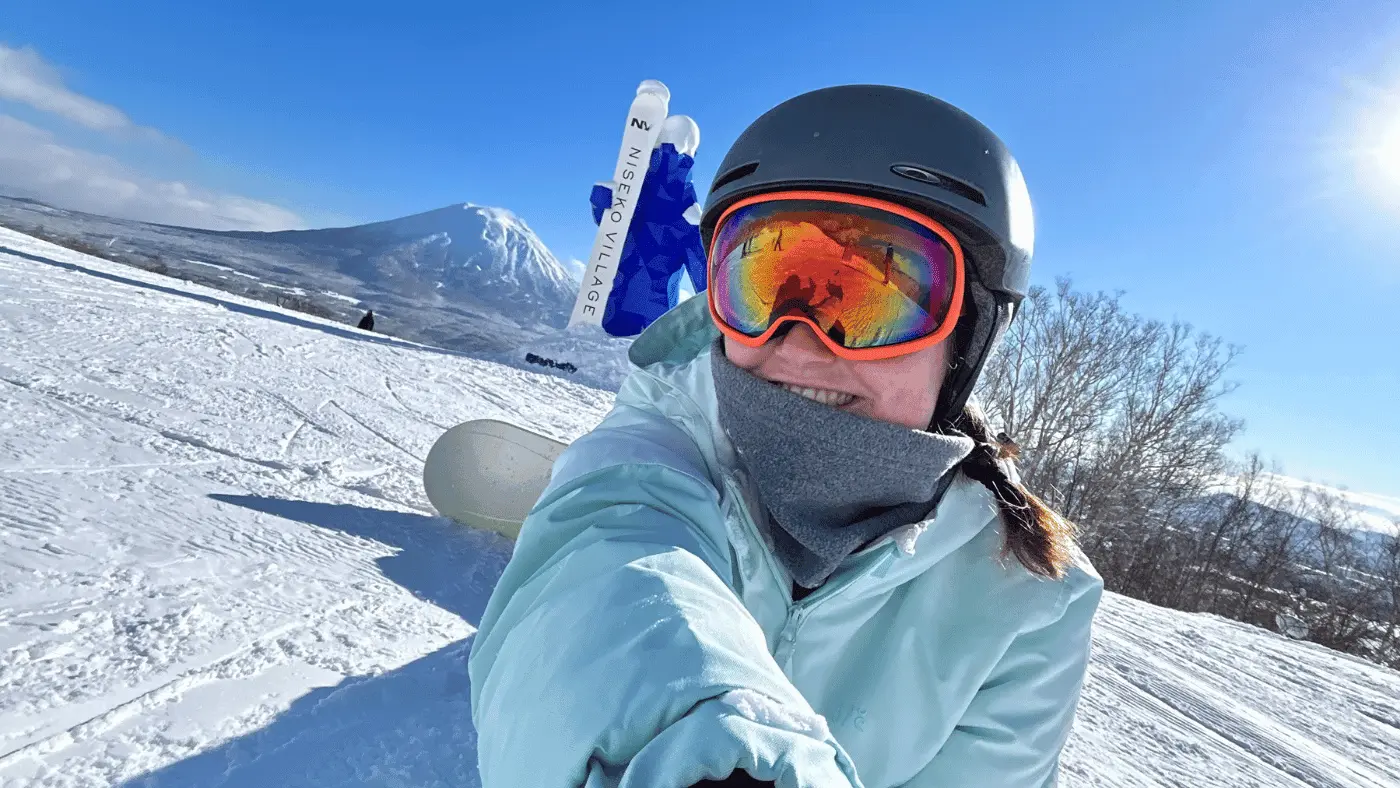
I was researching all the things I wanted to do and see. The choice can be overwhelming if, like me, you want to do everything. I came across the working holiday visa in Japan, and not only that, but a ski season in Niseko. I had never been to Japan before, let alone Asia. And I had never even done a winter sport. But I thought, what a place to learn.
I’ve muddled through all the phone calls, emails, shop-trawling, and website searching so you hopefully will be a little less clueless than I was.
Before moving to Japan
Apply for the Japan working holiday visa
Firstly, get organised. I am a list person, so ticking off all the ten or so documents I needed for the visa appointment and putting them in a little folder helped me not only get prepared but feel prepared too.
As part of your visa application, you’ll need to fill out an intended activities form. Write how you plan to spend time in several places in Japan, showcasing your knowledge and passion about Japanese places and culture in your personal statement.
Betsy's top tip: Despite being called a working holiday visa, do not mention or even imply that you are working on your visa forms. If the embassy officials think you may be visiting Japan for work rather than tourism, your visa will likely be rejected (speaking from experience).
Finally, indicate that you will stay a minimum of nine months out of the possible year in your application form. Remember, none of these documents are binding so your plans can change once you are in Japan.
Book your visa appointment
When you have all your documents ready, book your visa appointment. This can be no earlier than three months before you plan to fly to Japan but do it as soon as possible as the embassies can get busy.
When booking the appointment over the phone, they will give you an ID number. This will be the first thing they ask for when you turn up to your appointment, and they do not keep a note of it for you. This applies to the receipt they give you after your visa is approved. You must bring this paper receipt when you come to collect your visa and passport, otherwise you will be leaving empty-handed.
Betsy’s top tip: Take your laptop to the visa appointment. This way, if there are any problems with any of the documents you prepared, you can make any edits then and there and email it right back to them. The embassy officials are super helpful, and usually tell you what to change in order to get approved. Listen to them.
Even if the absolute worst-case scenario comes true and your visa is rejected - you can just reapply until you get it approved. My visa was rejected at first and I made it to Japan just fine.
Finding a job in Japan
Getting a job was actually fairly easy. Whilst in the UK, I checked out the locations for Work Japan and focused on Niseko, which had better nightlife to the more family-oriented resorts of Rusutsu and Furano.
I got offered a one-hour online interview for a Front Desk role at Niseko, which was one of the better paid jobs and they offered me the job a few days later, including a package of employee benefits – discounted lift pass, subsidised staff accommodation and support with setting up a Japanese bank account.
Buying the ski gear
You could easily justify spending endless amounts on ski gear, but you can also do it on a budget. Begin by asking a seasoned skier – they will tell you the different equipment you will need – sizing, brands etc. I then managed to buy a lot of good quality stuff from Vinted. And charity shops have a surprising amount of ski stuff – I got a ski jacket for £8.50 (rather than the usual £85 and upwards).
Betsy’s top tip: Buy things pre-season when there are generous shop discounts and people are selling last season’s gear. I got my merino wool base layers heavily discounted in Mountain Warehouse.
Some ski gear you may be better off buying brand new. Japan is known to have some of the deepest powder, meaning you are going to be constantly hit in the face with a lot of cold snow. I decided that being able to see and being warm were good reasons to splash out, so I purchased some new Oakley ski goggles and some high-quality ski gloves. You can always sell them at the end of your season and still get a good price for them. It’s all up to your budget and priorities, but you don’t want to go all that way to be miserably cold or unsafe.
Betsy’s top tip: Try to avoid buying things directly from the ski resort as the prices will be extortionate. There are good second-hand stores and Facebook groups from which you can purchase used gear in good condition when you arrive in Hokkaido.
Getting travel insurance for Japan
Promise I’m not a paid promoter, but I used Go Walkabout for my travel insurance, and they were so good. Not only did they patiently answer my millions of questions, but they specialise in working holiday visa travel insurance and have great add-on skiing cover at like half the price of other insurance providers I looked at.
Packing for a Japan working holiday
I have always hated packing. With curly hair and a five-step skin care routine, I have to seriously (and reluctantly) reign in the number of toiletries I take. This was made harder by recommendations to bring enough toiletries to last me for the whole ski season as Japan has very few western brands, and things like deodorant, medication, and suncream is often either much weaker or much more expensive.
Things were further complicated by the fact that I am 5ft7” with wide, size 6 feet. This is quite a bit bigger than the average Japanese woman, meaning I could struggle to find some clothes, and especially shoes, in my size. So, I stocked up on warm base layers (maybe a bit too much), snowboots, ski socks, ski gloves, salopettes, and a ski jacket to have all the essentials. I left most of the ski equipment (helmet, skis, poles, ski boots) to purchase when I arrived in Japan.
Betsy’s top tip: International flights are usually pretty good with baggage limits but domestic flights to the resorts usually have lower, stricter baggage limits. If you can afford to, travel with Japan Airlines or Air Nippon Airlines who have looser luggage rules.
If you don’t want to sacrifice your toiletries or clothes but don’t want to pay an arm and a leg for extra baggage, consider a courier company to send bags from home to your resort. Personally, I chose to stick to the 20kg to avoid the extra faff and expense. I was planning to travel round Japan after my ski season so having extra bags would be a massive pain.
First week in Japan
Sorting out a mobile phone in Japan
I was told that you need a credit card to get a Japanese SIM contract, so I got my first ever credit card, but it turned out debit cards work fine too. Whether you need a data-only contract or your own Japanese mobile number, Iljmio and Sakura Mobile are good options. Iljmio is cheaper, but unlike Sakura Mobile, there is no English support. A good way to test your Japanese if you’re keen!
Betsy’s top tip: I went with a data-only plan as my employers did not need me to get a Japanese number. I also downloaded and set up LINE before I left for Japan, which is basically the Japanese WhatsApp. I didn’t want to lose my English number but definitely didn’t want to pay for two SIM contracts at once. So, I switched to pay as you go with my English SIM contract, which I had to use every 90 days in Japan to keep it active.
Money in Japan
Japan remains a cash country. However, it can be expensive to withdraw cash in Japan, so I was advised to take enough JPY to be able to live (and have some fun) for 1-2 months, depending on when you will first get paid by your employer and how much ski gear you have left to buy when you arrive.
When you arrive in Tokyo on JENZA’s Work Japan, you will be supported in setting up a Japanese bank account for your salary to be paid into. Consider getting a Starling, Revolut or Monzo account if you need to access savings back home with minimal exchange rates and global transaction fees.
Driving in Japan
I had to get an International Driving Permit for my job role, but I would’ve got one anyway as I am not missing out on the chance to go real-life Mario Karting in the streets of Tokyo! It only takes ten minutes to apply for one and doesn’t cost much at all. It’s harder to get one once you are in Japan, so it may be worth doing before you leave.
Thinking of moving to Japan?
The prep is a big part of doing a ski season. It’s completely normal to find it stressful or overwhelming at times - you are moving to a different country! Take it slow, accept that you will have the occasional freak out, and most importantly, see this stage as a build-up to get buzzed about your trip.
Our Work Japan packages will set you up with everything you need to live and work in Japan. We’ll guide you through the Japan working holiday visa application, sort out arrival accommodation, and we'll be on hand with unlimited job placement services for the duration of your visa. You also have the option of a pre-arranged English-speaking ski season job (Nov-Mar). Let the sushi times roll!

ABOUT THE AUTHOR
Betsy Lake
JENZA Work Japan roadtester
It was a tough job, but someone had to do it. Our roadtesters trial and shape every JENZA experience to make sure it serves our travel community first. Because if it didn't fly with them, it's not going to fly with you.
"Now, I had never been to Asia before, let alone Japan. And I had never even done one winter sport, let alone skiing. But I thought, what a place to learn."
Related Blogs

The Jenza newsletter